April 3, 2025
How Much Can a Forklift Lift?
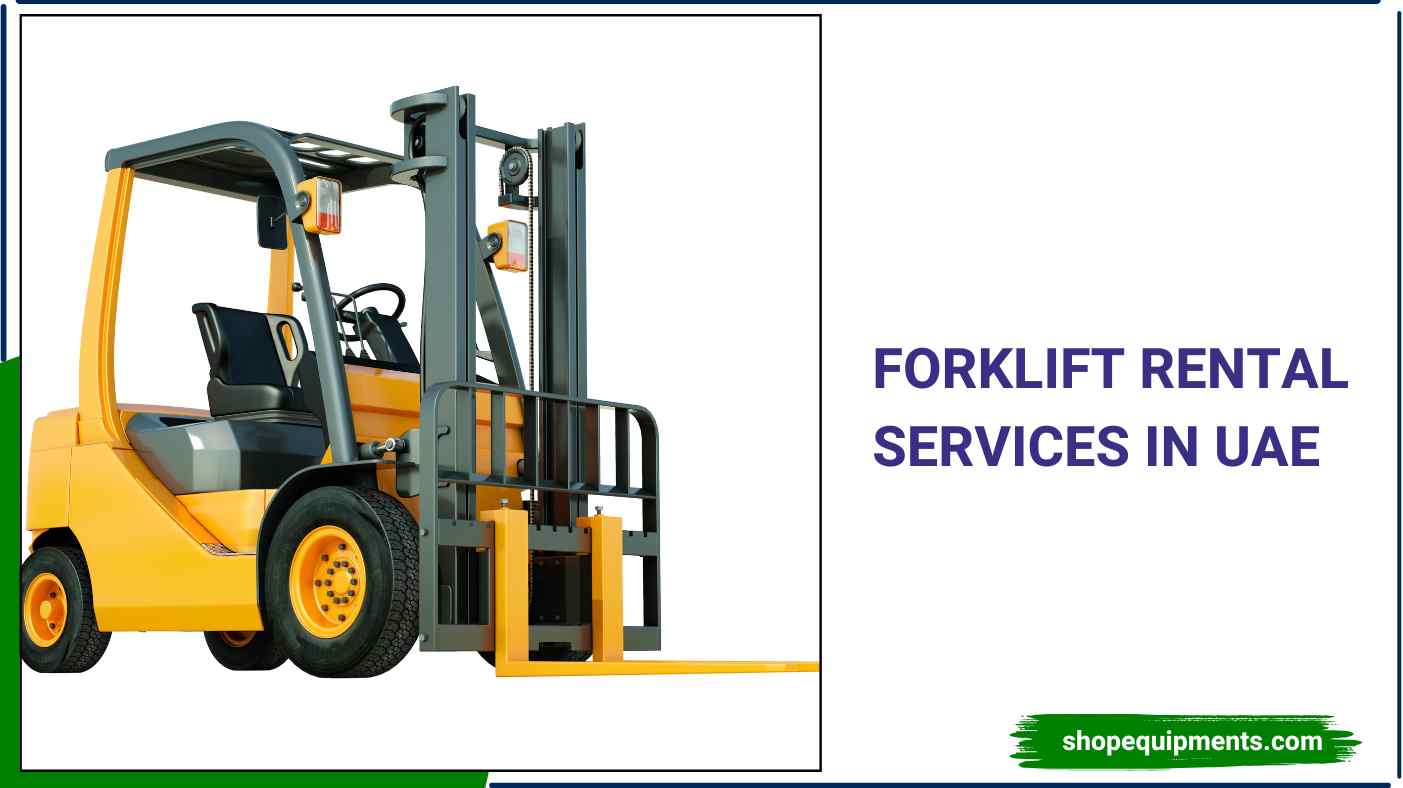
Forklifts are essential in warehouses, construction sites, and manufacturing plants. They help lift, move, and transport heavy loads with ease. But how much weight can a forklift lift? Understanding forklift load capacity is crucial for safety and efficiency. Let’s explore the factors that determine forklift lifting capacity and how to choose the right one for your needs.
Understanding Forklift Load Capacity
The lifting capacity of a forklift depends on several factors, including the type of forklift, its power source, and load center. Most standard forklifts can lift anywhere between 3,000 to 50,000 pounds, depending on the model and specifications.
Factors Affecting Forklift Lifting Capacity
- Forklift Type: Different types of forklifts have varying lifting capacities.
- Warehouse forklifts: 3,000 to 5,000 lbs
- Industrial forklifts: 10,000 to 30,000 lbs
- Heavy-duty forklifts: 30,000 to 50,000+ lbs
- Load Center: The load center is the distance from the forklift’s mast to the center of gravity of the load. If the load is unbalanced or extends beyond the standard 24-inch load center, the forklift’s lifting capacity decreases.
- Forklift Power Source:
- Electric forklifts typically handle lighter loads (up to 10,000 lbs)
- Internal combustion (IC) forklifts can lift heavier loads (10,000 – 50,000 lbs)
- Attachments and Modifications: Adding specialized attachments like extended forks, side shifters, or clamps can alter the forklift’s lifting capacity.
- Mast Height and Tilt: The forklift’s mast height and tilt angle also impact its lifting ability. Lifting a heavy load to a high elevation may reduce stability, requiring additional counterweight support.
- Tire Type and Surface Conditions: Pneumatic tires provide better stability on rough surfaces, while cushion tires are suited for smooth warehouse floors. Choosing the right tires enhances lifting efficiency and safety.
- Counterbalance and Weight Distribution: Forklifts use counterweights to balance heavy loads. The placement of the load on the forks and proper weight distribution ensure stability and safety.
Understanding Forklift Load Charts
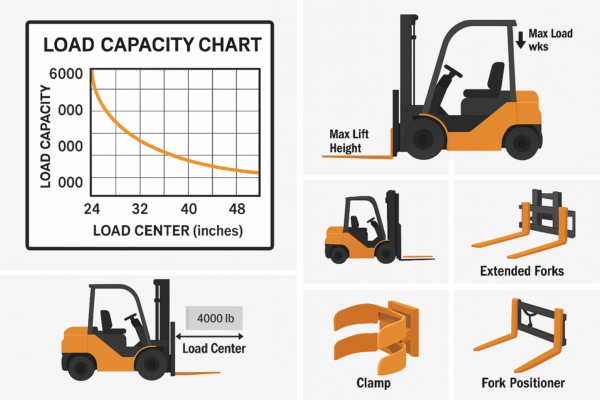
Every forklift comes with a load capacity chart, typically located on the data plate. This chart provides essential details such as:
- Maximum weight the forklift can lift at different load centers
- Maximum lift height for specific weights
- Impact of attachments on lifting capacity
- Load capacity reduction at different angles or extensions
Ignoring this chart can lead to overloading and potential forklift tipping accidents. Always consult the manufacturer’s guidelines before lifting heavy loads.
How to Choose the Right Forklift Capacity?
When selecting a forklift, consider the following:
- Your typical load weight: Choose a forklift with a slightly higher capacity than your average load.
- Load dimensions and stability: Ensure the forklift can handle your load’s size and shape.
- Work environment: For indoor warehouses, electric forklifts are ideal, while outdoor heavy-duty tasks require IC forklifts.
- Manufacturer’s Load Chart: Always check the forklift’s data plate for specific capacity ratings.
- Maneuverability Requirements: Narrow aisle forklifts are preferable for tight warehouse spaces, while rough-terrain forklifts are essential for outdoor applications.
- Height and Reach Needs: Consider how high the forklift needs to lift the load, as taller masts require more stability and counterweight.
- Fuel Type and Efficiency: Electric forklifts are cost-effective for indoor use, while diesel and propane forklifts offer higher power for outdoor applications.
Common Forklift Load Handling Mistakes
To prevent accidents and ensure efficiency, avoid these common mistakes:
- Overloading: Lifting loads beyond the recommended capacity can cause forklift instability.
- Ignoring Load Center: If the load is placed incorrectly, it shifts the center of gravity, reducing capacity.
- Using Incorrect Attachments: Some attachments alter the forklift’s balance and require recalculating the lifting capacity.
- Uneven Terrain Operation: Rough or sloped surfaces can impact lifting stability and should be navigated cautiously.
- Failure to Perform Pre-Operational Checks: Routine forklift inspections help identify mechanical issues before operation.
- Improper Load Securing: Unsecured loads can shift, leading to imbalanced weight distribution and increased risk of tipping.
- Operating on Slopes Improperly: Forklifts should always be driven with loads uphill when moving on inclines.
- Ignoring Load Height Restrictions: Exceeding height limits can make the forklift unstable, increasing the risk of tipping.
Safety Tips for Operating a Forklift
- Always check the forklift’s data plate before lifting loads.
- Use proper counterweights if required for heavy lifting.
- Never exceed the recommended lift height when carrying heavy loads.
- Distribute weight evenly on the forks to maintain balance.
- Use appropriate personal protective equipment (PPE) such as helmets and safety boots.
- Ensure clear visibility and avoid blind spots when maneuvering heavy loads.
- Drive cautiously and avoid sharp turns when carrying heavy loads.
- Follow proper loading and unloading procedures to prevent accidental tipping.
- Conduct routine maintenance checks to ensure forklift reliability and longevity.
- Train operators on safe lifting techniques and load handling best practices.
Why Understanding Forklift Capacity is Important
Operating a forklift beyond its lifting capacity can cause accidents, equipment damage, and injuries. Ensuring proper load handling improves workplace safety, enhances efficiency, and extends forklift longevity. Employers must provide proper training to forklift operators and enforce safety regulations to reduce workplace risks.
Final Thoughts
Choosing the right forklift with the appropriate lifting capacity is essential for maintaining productivity and safety. If you’re looking for forklifts with different lifting capacities, visit www.shopequipments.com to explore our wide range of forklift models and accessories!
Keywords: forklift lifting capacity, how much can a forklift lift, forklift weight limit, forklift load center, warehouse forklift, heavy-duty forklift, forklift safety, best forklift for heavy loads, forklift specifications, forklift buying guide, forklift load chart, forklift attachments, overloading forklift, forklift stability, forklift safety tips, forklift counterweights, forklift load balancing, forklift maneuverability, rough terrain forklift, warehouse safety, forklift operator training, forklift height limits, forklift slope safety, forklift weight distribution.