May 2, 2025
Safe Use of Hand Pallet Trucks: Practical Safety Tips
The workplace is an environment where precision and intention intersect. When it comes to using hand pallet trucks—common tools in warehouses, retail spaces, and manufacturing—safety isn’t just a checklist. It’s about understanding the context, interpreting user intent, and applying clear action steps with semantic clarity.
Too often, safety guides overlook user-focused language and assume prior knowledge. This article brings a grounded, easy-to-follow explanation of safe pallet truck handling, integrating practical knowledge with language models of instruction—something especially important in multilingual work environments.
1. What Is a Hand Pallet Truck? Recognizing the Object Entity
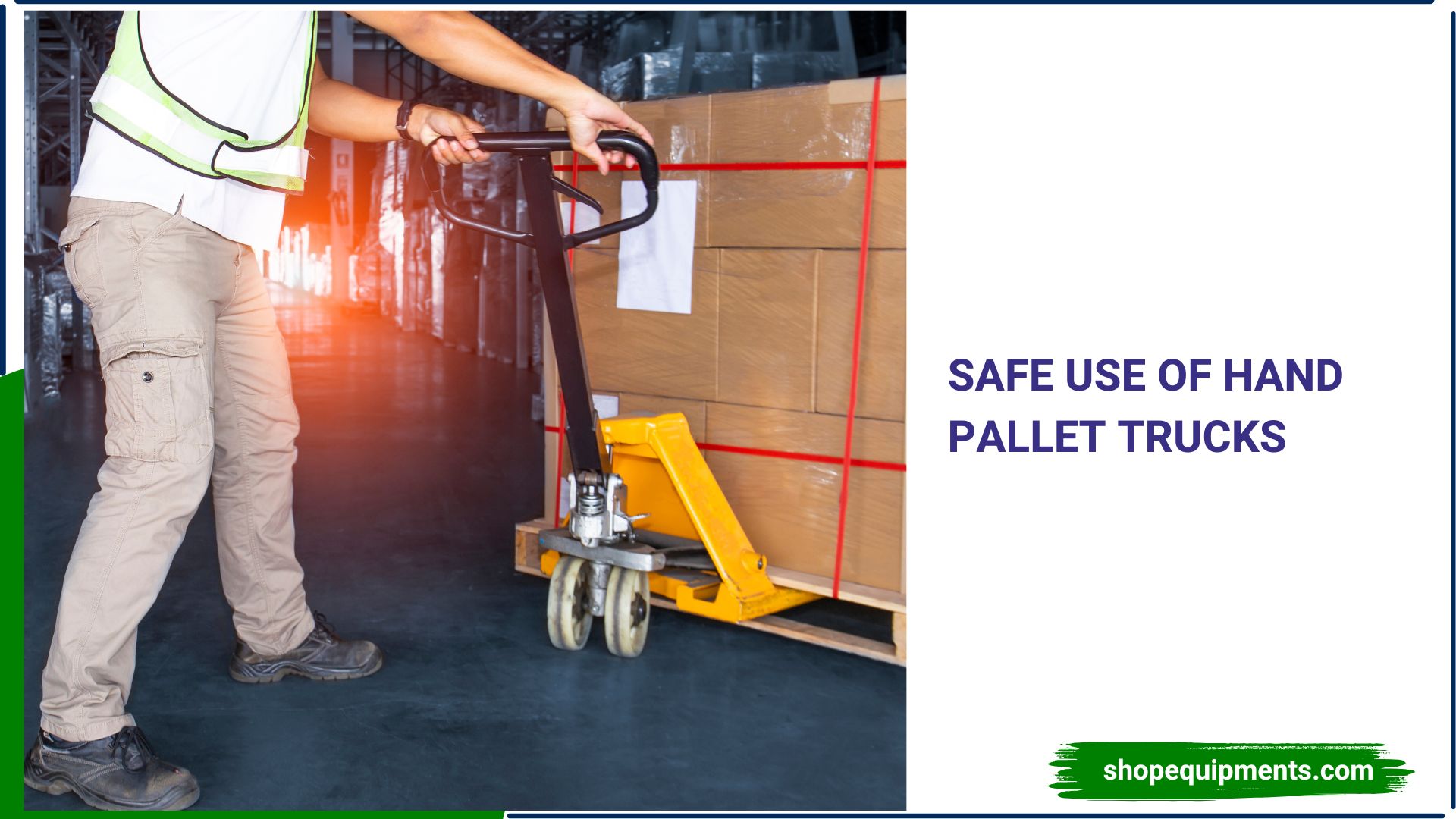
Before jumping into safe use, let’s clearly define the object entity: a hand pallet truck is a manually operated tool designed to lift and move palletized loads over short distances. Its key components include:
- Forks – slide under the pallet
- Hydraulic pump – lifts the forks
- Steering handle – controls movement
- Load wheels – support the weight
Understanding the parts is essential to forming the right intent detection when using or instructing someone on the equipment.
2. The Importance of Safe Usage: Going Beyond Compliance
Safe usage isn’t just a regulation—it’s a reflection of your company’s values and your personal responsibility. Injuries due to pallet truck misuse may result from:
- Overloading
- Incorrect maneuvering
- Inadequate training
- Poor surface conditions
By embedding safety into the workflow, companies signal trust, reduce operational downtime, and foster a psychologically safer environment.
3. Pre-Use Inspection: Action Verbs That Drive Safety Behavior
Before every shift, perform a semantic checklist using clear action verbs that prompt mental action:
- Inspect the wheels and forks for damage
- Check for hydraulic leaks
- Ensure the handle operates smoothly
- Confirm the weight capacity
This structured use of linguistic commands improves compliance and reduces ambiguity—important in multilingual or cross-training scenarios.
4. Understanding Load Limits: Numerical Entities in Practical Language
Every pallet truck has a specific load capacity, usually ranging from 1500 kg to 3000 kg. This number isn’t arbitrary—it’s critical to safety. Overloading can cause:
- Tipping over
- Wheel damage
- Back strain to the operator
When training, always use numerical entity tagging (e.g., “maximum load: 2000 kg”) as part of the visible instructions on or near the equipment.
5. Positioning and Lifting: Semantic Relevance in Movement
Lifting isn’t just mechanical; it’s about contextual meaning—how positioning and motion relate to safety. Here’s what to emphasize:
- Align the forks squarely with the pallet
- Center the load before lifting
- Pump the handle using stable foot positioning
Words like align, center, and pump aren’t just instructions—they’re deliberate linguistic choices that clarify motion in space. For non-native speakers, this distinction can mean the difference between safety and injury.
6. Maneuvering in Tight Spaces: Context-Aware Movement
Warehouses often present tight, dynamic spaces where intent interpretation is critical. Operators should:
- Move slowly around corners
- Avoid reverse pulling with twisted posture
- Use mirrors or spotters when needed
- Keep load in front view, not obstructing visibility
Using spatial language helps establish environmental awareness, especially when teaching situational responses.
7. Slope and Surface Considerations: Embedding Context in Safety Decisions
Avoid using pallet trucks on uneven or sloped surfaces. Slopes introduce physics-based risks like:
- Runaway loads
- Back strain during uphill movement
- Loss of control on descents
Train users to identify environmental triggers that signal unsafe use. Use phrases like “stop at incline,” or “evaluate surface grip” to encourage proactive intent recognition.
8. Parking and Storage: Behavioral Commands That Stick
When finished, don’t just “leave the pallet truck somewhere.” Use clearly defined behavioral commands:
- Lower the forks to the ground
- Position away from walkways
- Report any faults
Reinforcing these verbs builds routine habits that are easy to audit and easier to remember.
9. Training and Communication: Using Natural Language Understanding in Instructions
Every training program should consider language comprehension diversity. Simple instructions with natural syntax are more effective than technical jargon. For example:
- Instead of “engage the hydraulic lever to initiate elevation,” use “pump the handle to lift.”
This shift in instructional language aligns with Google NLP principles of understanding and clarity.
10. Regular Maintenance and Feedback Loops: Operational Language in Practice
Maintenance isn’t just mechanical—it’s linguistic too. Operators should be encouraged to describe faults clearly. Create structured maintenance logs with:
- Date
- Operator name
- Issue description (e.g., “left wheel drags on turns”)
Using entity recognition in these logs (date, person, object, event) improves reporting and long-term safety planning.
Conclusion: Merging Safety with Meaningful Communication
The safe use of hand pallet trucks is not just about following rules—it’s about embedding clarity, contextual awareness, and human understanding into every action. From inspection protocols to intent-driven movement, each moment is a chance to reinforce a culture of safety through smart communication.
The more we use human-centered instructional language, the more effectively we protect people, prevent accidents, and promote sustainable work practices.